The next evolution of air combat isn't just about faster jets or deadlier missiles; it's about seamlessly integrating human ingenuity with autonomous power. This critical juncture, often called Crewed vs. Uncrewed Integration (Collaborative Combat Aircraft - CCA), is reshaping the very fabric of military aviation, particularly for the U.S. Air Force (USAF). Facing a looming capacity and lethality shortfall against peer adversaries like China, the USAF is banking on these uncrewed partners to revolutionize how we fight, survive, and win in the skies.
This isn't just about replacing pilots with robots; it's about creating a synergistic team where human cognitive strengths complement the persistent, risk-tolerant capabilities of advanced AI. The path ahead demands a human-centric approach, ensuring that technology serves the warfighter, not the other way around.
At a Glance: Understanding Collaborative Combat Aircraft (CCA)
- What they are: Autonomous uncrewed aircraft capable of independent navigation, flight, sensor management, decision-making, and mission execution. Think of them as AI-driven wingmen.
- Key Differentiator: Unlike remotely piloted drones (like the MQ-9 Reaper), CCAs operate mostly independently, managed by a nearby human flight or mission commander, much like a crewed formation.
- Mission: Force multipliers that fly alongside 5th and 6th-generation manned fighters, carrying weapons, performing intelligence, surveillance, and reconnaissance (ISR), early warning, electronic warfare, and strike missions.
- Strategic Imperative: Address the USAF's capacity and survivability shortfall, especially in vast combat areas like the Indo-Pacific, by increasing the number of combat assets on target.
- Core Benefits: Focus for human pilots on critical tasks, reduced risk to human life, high attrition tolerance for uncrewed assets, and imposing significant costs on adversaries.
- The Big Challenge: Integrating human factors directly into the design and operation of these autonomous systems to build trust, ensure dependable performance, and optimize human-machine teaming.
Beyond the Remote Control: What Makes CCAs Different?
For decades, the idea of uncrewed aircraft conjured images of drones like the Predator or Reaper—piloted from thousands of miles away, their every move dictated by a human operator. Collaborative Combat Aircraft (CCA) represent a radical departure from this model. Instead of a remote stick-and-rudder approach, CCAs are envisioned as highly autonomous, AI-driven platforms that operate intelligently and independently, working with human operators rather than simply for them.
Imagine a human fighter pilot, not flying alone, but leading a formation of multiple uncrewed aircraft. These CCAs aren't just following; they're navigating, managing their own sensors, making tactical decisions, and executing mission elements with a high degree of independence. They are mission-customizable, meaning they can be equipped with a specific mix of sensors, weapons, or electronic warfare systems tailored for the task at hand. This dynamic allows CCAs to serve multiple roles: a loyal wingman carrying extra weapons, an advance scout pushing into contested airspace, an electronic warfare jammer, or even a decoy drawing enemy fire. They are designed to be significantly less expensive than manned fighters, making their potential loss in combat more acceptable.
The Indo-Pacific Imperative: Why We Need Force Multipliers Now
The vast expanse of the Indo-Pacific theater presents a unique and daunting challenge for airpower. Traditional strategies, relying on a small number of extremely capable but expensive manned aircraft, are no longer sufficient to project power across such distances and in a potential peer-level conflict. The "fewer but more capable" mantra has hit its limits.
This is where CCAs step in. They are not merely supplemental aircraft; they are force multipliers designed to dramatically increase combat capacity. Industry experts suggest a ratio of 6-7 CCAs per piloted aircraft is achievable, potentially scaling even higher for untethered or swarmed operations. This sheer volume of assets on target fundamentally alters the calculus for adversaries.
The strategic benefits of effectively teaming human pilots with CCAs are profound:
- Humans Focus on the High-Level: With CCAs handling routine tasks, data processing, and dangerous maneuvers, human pilots can dedicate their unique cognitive abilities to critical thinking, unforeseen events, and complex battlespace management. They become mission commanders, not just stick-and-rudder operators.
- Reducing Risk to Precious Lives: CCAs allow for more aggressive employment in high-threat environments. They can act as "missile sinks," drawing enemy fire away from manned aircraft, or push deep into defended airspace, reducing direct risk to human pilots.
- Attrition Tolerance is Key: Losing an experienced human warfighter is devastating. Losing a CCA, while still undesirable, does not carry the same human cost. Commanders can accept higher CCA losses, allowing for more daring tactics without depleting vital human capital. Replacements can be fielded rapidly with consistent skill levels through software updates.
- Imposing Costs on the Adversary: Each CCA an adversary shoots down represents a significant expenditure of their own resources (missiles, fuel, airframe wear). By deploying CCAs, we force the enemy to expend valuable assets, shifting the economic burden of conflict.
The Human-Centric Teaming Challenge: Five Keys to Success
The technological readiness for autonomous flight is here, but the core challenge isn't just building an AI that can fly a plane. It's about designing an AI that can team effectively with a human. The USAF understands this deeply, recognizing that human factors must be integrated from the very beginning, not bolted on as an afterthought. This requires prioritizing human factor engineering as a first principle, focusing on five broad teaming concepts that mirror effective human-to-human flying formations.
1. Maximize Strengths: Exploiting Unique Attributes
Effective teams understand and leverage the unique strengths of each member. For human-CCA teaming, this means carefully defining operational concepts and tactics that highlight what humans do best (adaptability, intuition, strategic thinking) and what CCAs do best (persistence, speed, data processing, risk tolerance).
- The Playbook: The USAF needs to develop clear operational concepts, concepts of employment (CONEMPs), and tactics, techniques, and procedures (TTPs) that articulate exactly how humans and CCAs will interact. This isn't theoretical; it demands robust, real-world training scenarios.
- Recommendations:
- Optimize Team Composition: Determine the ideal ratio and types of CCAs for different manned platforms and missions.
- Identify Strengths & Weaknesses: Understand the cognitive and physical limits of human pilots and the algorithmic strengths and potential blind spots of CCAs.
- Program Human-like Teaming Dynamics: Develop AI software that models how human pilots communicate, anticipate, and react in a formation. This is where the magic of true collaboration happens.
- Build Mastery: Continuous testing, training, and debriefing are essential to refine TTPs and ensure both humans and machines learn and adapt.
2. Include Operators: Building Bridges with Warfighters
The best tools are designed by their users. Involving warfighters—the actual pilots and mission commanders—early and continuously in CCA development is paramount. Their insights are invaluable for shaping design, improving understanding of CCA decision-making, and identifying how to best exploit strengths while mitigating vulnerabilities.
- Bridging the Gap: Pilots need to understand why a CCA made a certain decision, not just what it did. This transparency builds trust and allows them to anticipate and correct when necessary.
- Recommendations:
- Explainable AI Interfaces: Develop user interfaces that clearly communicate the CCA's real-time performance, decision-making logic, and current battlespace understanding.
- Warfighter-Centric Design: Involve pilots in developing mission planning, rehearsal, and debriefing tools that allow them to interact with and provide feedback on CCA behaviors.
- Feedback Loops: Establish structured mechanisms for operators to provide input that directly informs CCA software updates and hardware design.
3. Dependability: The Foundation of Trust
Imagine flying in formation with a wingman you don't trust. That's a non-starter in combat. Warfighters must have absolute confidence that CCAs will consistently behave as expected, maneuvering safely, maintaining tactical priorities, sharing accurate battlespace understanding, and deferring to human control when required. Dependability is the bedrock of trust.
- Predictable Performance: CCAs must not only be autonomous but also predictably autonomous. Methods for real-time assessment of their performance and accuracy are crucial for human operators.
- Recommendations:
- Real-time Integrity Checks: Develop systems to assess the integrity, performance, and accuracy of CCA algorithms and sensors in real-time.
- Algorithm Transparency: Provide operators with feedback on the integrity of the CCA's algorithms and the security of its data, ensuring it hasn't been compromised.
- Monitor Battlespace Awareness: Equip humans with tools to monitor the CCA's understanding of the battlespace, allowing them to quickly identify discrepancies and intervene if the CCA misinterprets a situation.
4. Assured Control: Resilience in Contested Space
Combat zones are rarely pristine environments. In spectrum-contested environments, where communications can be jammed or denied, humans need resilient and reliable means of controlling CCAs. This means designing for "comm-out contracts," where CCAs can continue to operate effectively even without constant communication. The level of human control also needs to be dynamic, allowing pilots to adjust based on battlespace demands.
- Adaptable Control: Sometimes a pilot needs tight control; other times, the CCA needs maximum autonomy. The system must allow for this flexible shift in control paradigms.
- Recommendations:
- Flexible Control Paradigms: Develop interfaces and protocols that allow humans to dynamically shift from high-level mission directives to direct control, and vice-versa.
- Proactive/Responsive Communication: CCAs should be designed to communicate their intent and status proactively, and respond clearly to human queries.
- Resilient Connectivity: Prioritize secure, jam-resistant communication links, but also design for graceful degradation when comms are lost.
- "Comm-Out" Contracts: Establish clear pre-programmed behaviors and decision matrices for CCAs to follow when communications are denied, ensuring they don't become rogue assets.
5. Manageable Workloads: Seamless Integration
The goal of CCAs is to lighten the human pilot's load, not add to it. Human operators must be able to communicate, collaborate, and control CCAs with minimal friction. This means intuitive interfaces for flight control, communication, coordination, and mission integration that feel like natural extensions of the manned aircraft's existing systems, ensuring CCA management doesn't detract from primary mission duties.
- Frictionless Interaction: The last thing a pilot needs in a dogfight is a cumbersome interface. Managing CCAs should be as intuitive as managing a human wingman.
- Recommendations:
- Collaborate on Intuitive Interfaces: Work directly with warfighters to design user interfaces that are ergonomic, clear, and reduce cognitive load.
- Integrated Command & Control: Embed CCA command and control interfaces directly into the existing operational flight programs of manned weapon systems, making it a natural part of the cockpit environment.
- Minimize "Switchology": Design for minimal manual inputs, prioritizing voice commands, gesture controls, or predictive AI interfaces where appropriate.
The Road Ahead: From Concept to Combat Readiness
The U.S. Air Force isn't just talking about CCAs; it's investing heavily and moving rapidly. The Next Generation Air Dominance (NGAD) program, a "system-of-systems" approach, places CCAs at its core. USAF Secretary Frank Kendall has been a vocal proponent, emphasizing that the technology for a single crewed aircraft to effectively control multiple uncrewed aircraft is already mature enough for development.
The ambition is significant: the USAF aims to pair at least 1,000 uncrewed CCAs with advanced manned fighters, specifically envisioning two CCAs with each of 200 NGAD platforms and 300 F-35s. This represents a monumental shift in airpower capacity.
Program Status & Key Developments:
- Funding: The FY2024 budget request included $490 million for CCA development, experimentation, and testing, alongside $72 million for an experimental operations unit. Total R&D spending is forecast to hit $6 billion through FY2028.
- Timeline: The first batch of production-representative CCAs is expected by the late 2020s, with an early operational capability targeted for 2030.
- Selected Developers: In April 2024, Anduril and General Atomics Aeronautical Systems (GA-ASI) were selected to design, manufacture, and test these critical flight test articles. GA-ASI's offering is based on its XQ-67A, which had a successful maiden flight in February 2024.
- Leveraged Programs: The CCA effort stands on the shoulders of groundbreaking work from:
- DARPA's Air Combat Evolution (ACE) program: Pushing the boundaries of AI-powered human-machine collaboration in air-to-air combat, including dogfighting.
- Air Force Research Laboratory (AFRL) Skyborg program: This initiative developed an open autonomous aircraft teaming architecture and modular core autonomy software. CCA development will heavily leverage this "Skyborg autonomy core system," with $51.7 million requested in FY2024 for its transition.
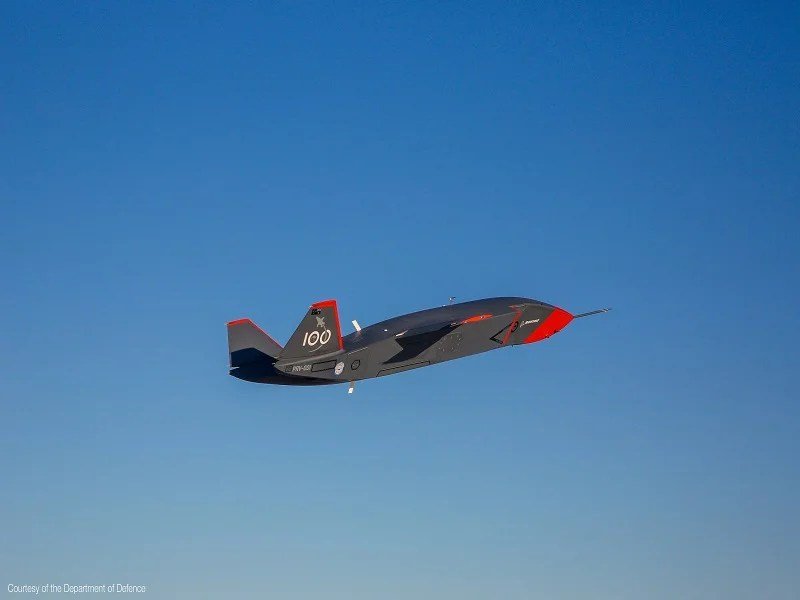
- Boeing Australia's MQ-28A Ghost Bat (Airpower Teaming System): An international collaboration that has significantly advanced research into automation, AI, and human-machine teaming.
- Testing and Prototypes: The Skyborg program has already tested several uncrewed combat air vehicle (UCAV) prototypes, including GA-ASI's MQ-20 Avenger, Kratos XQ-58 Valkyrie, and the Boeing MQ-28 Ghost Bat. Additionally, the VISTA X-62A, an AI-piloted F-16D, has been instrumental in testing and refining autonomous flight capabilities.
- Project Venom: A $50 million USAF initiative for FY2024, Project Venom aims to equip six F-16 Viper jets with AI-enabled self-flying capabilities. These F-16s will serve as critical testbeds to accelerate the refinement of autonomous software for CCA technology.
- Potential Contenders: Beyond the current selections, other major players are developing advanced uncrewed teaming aircraft, including Boeing's MQ-28A Ghost Bat, Kratos's family of uncrewed aircraft (like the XQ-58A), and GA-ASI's Gambit family of autonomous collaborative platforms (e.g., Gambit 1 for ISR, Gambit 2 for Air-to-Air).
As these programs mature, they are paving the way for the sixth-generation aircraft era, where manned and uncrewed platforms are designed from the ground up to operate as a cohesive, networked system. Learn about sixth generation aircraft and their integration with CCAs represent a fundamental shift in how airpower will be conceived and executed.
Beyond the Algorithm: The Enduring Imperative of Human Leadership
While technical hurdles in autonomous flight control, safety protocols, and decision-making are being overcome at an impressive pace, the enduring challenge for Crewed vs. Uncrewed Integration (Collaborative Combat Aircraft - CCA) remains firmly rooted in the human domain. The true success of CCAs won't hinge solely on their individual technological prowess, but on their ability to integrate seamlessly and reliably into human-led combat formations.
Human warfighters bring an irreplaceable set of skills to the fight: cognitive flexibility, adaptive reasoning, pattern recognition beyond programmed algorithms, and an intuitive understanding of complex, rapidly evolving situations. These human attributes are not replaced by AI; they are augmented and amplified.
Therefore, the mission for the USAF is clear: prioritize the development of effective human-CCA teams. This means fostering trust, ensuring dependable performance, and crafting an operational ecosystem where these autonomous teammates truly enhance the human element. By focusing relentlessly on human factors, understanding teaming dynamics, and building bridges between human intuition and machine precision, we can fully unleash the potential of CCAs as game-changing force multipliers. Failing to do so would risk not only losing the strategic advantage but also jeopardizing the lives of the very warfighters these systems are designed to protect. The future of air combat demands a partnership, with human leadership at its core.