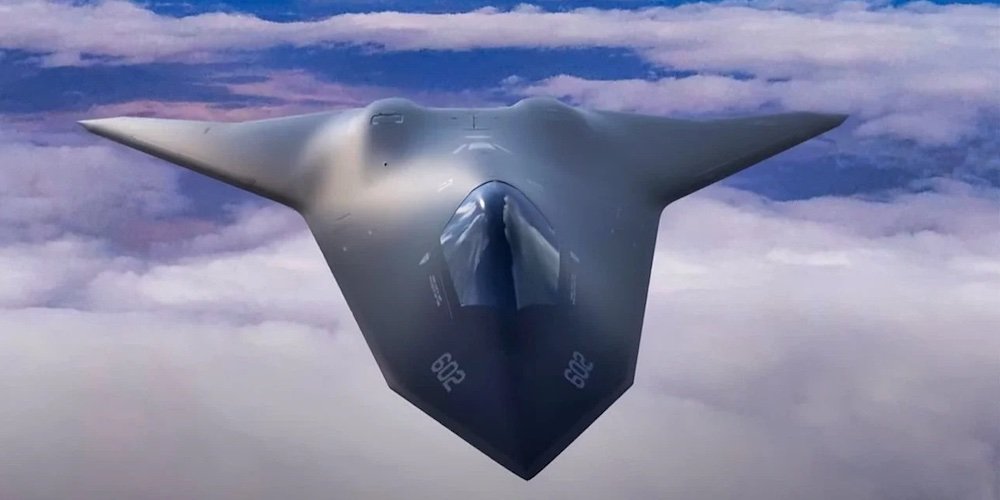
The rumble you hear isn't just the sound barrier breaking; it's the future of air combat taking shape. For decades, fighter jets have defined air superiority, evolving through generations of speed, stealth, and lethal precision. But with fifth-generation aircraft like the F-22 Raptor and F-35 Lightning II now operational, the global defense community is already peering ahead, defining sixth-generation aircraft as the next revolution. These aren't just incremental upgrades; they're an entirely new paradigm, poised to redefine warfare as we know it, blending advanced technology with unprecedented connectivity and autonomy.
At a Glance: What Makes a Sixth-Generation Aircraft?
- Beyond Stealth: Expect multi-frequency stealth, active cancellation, and even adaptive camouflage.
- AI at the Helm: Artificial intelligence will be deeply integrated for real-time decision-making, adaptive tactics, and autonomous operations.
- Team Players: Manned-Unmanned Teaming (MUM-T) will be standard, with "loyal wingman" drones augmenting human pilots.
- Hypersonic Strike: Designed to carry and deploy hypersonic weapons, drastically cutting reaction times.
- Networked Warriors: Acting as central nodes in a vast "system of systems" for unparalleled situational awareness (e.g., Joint All-Domain Command and Control - JADC2).
- Adaptive Power: Featuring variable-cycle engines that optimize for both speed and fuel efficiency.
- Future Weapons: Potential integration of directed-energy weapons, like lasers, for defense and offense.
- Optionally Manned: The ability to operate with or without a pilot, offering unparalleled mission flexibility and risk reduction.
The Dawn of a New Era: Why Sixth-Generation?
The concept of a sixth-generation fighter emerged from a recognition that current fifth-generation aircraft, while revolutionary, face evolving threats and operational demands. Adversaries are developing more sophisticated air defenses, advanced electronic warfare capabilities, and even counter-stealth technologies. Simultaneously, the nature of conflict is shifting towards multi-domain operations that require seamless integration across air, land, sea, space, and cyber.
This isn't merely about building a faster, stealthier jet. It's about crafting an entire combat ecosystem where the aircraft itself is just one component in a vast, interconnected network. The aim is to achieve sustained air dominance in highly contested environments, execute long-range strikes with unprecedented precision, and provide a flexible, adaptable platform for future threats. If you're keen to dive deeper into how these futuristic machines stack up against their predecessors and what drives their development, you can explore sixth-generation aircraft.
Unpacking the Core Capabilities: What Will These Jets Do?
Sixth-generation aircraft are being designed from the ground up to push the boundaries of aviation and warfare. Let's break down the defining characteristics that set them apart.
The Invisible Edge: Advanced Stealth Technology
While fifth-generation fighters like the F-35 are masters of stealth, their successors aim for a new level of invisibility. This isn't just about reducing radar cross-section (RCS) from the front, but across a wider range of frequencies and angles. Think:
- Multi-spectral Stealth: Reduced signatures against not just radar, but also infrared (IR), acoustic, and even visual detection.
- Adaptive Camouflage: Potentially using "smart skins" or active cancellation technologies that adapt to environmental conditions or adversary sensors, dynamically changing their signature.
- Active Cancellation: Using onboard emitters to actively interfere with incoming radar signals, effectively "cloaking" the aircraft.
Thinking Machines: Artificial Intelligence and Autonomous Operations
This is arguably the most transformative aspect. AI won't just assist the pilot; it will be an integral part of the aircraft's decision-making architecture.
- Real-time Decision Making: AI will process vast amounts of sensor data almost instantaneously, identifying threats, recommending tactics, and even executing maneuvers faster than a human pilot ever could.
- Adaptive Tactics: Machine learning algorithms will allow the aircraft to adapt its combat strategies on the fly, learning from previous engagements and dynamically responding to unexpected scenarios.
- Autonomous Flight: Many sixth-generation platforms are being designed with optional manned operation, meaning they can fly and fight autonomously, reducing risk to human pilots in the most dangerous missions.
Loyal Wingmen and Swarms: Manned-Unmanned Teaming (MUM-T)
The idea of a single piloted fighter operating alone is becoming obsolete. Sixth-generation aircraft are conceived as command centers for multiple unmanned "loyal wingman" drones, often called Collaborative Combat Aircraft (CCAs).
- Extended Reach and Sensor Coverage: CCAs can fly ahead, extend sensor range, scout dangerous areas, and carry additional weapons or electronic warfare payloads.
- Risk Mitigation: These drones can perform high-risk missions that human pilots would otherwise undertake, preserving valuable manned assets.
- Mass and Adaptability: A single manned aircraft can control a swarm of CCAs, creating a distributed sensor network and overwhelming adversary defenses. The U.S. Air Force, for instance, plans for over 1,000 CCAs, with prototypes like General Atomics' YFQ-42A and Anduril's YFQ-44A already undergoing test flights for manned-unmanned teaming. These loyal wingmen are projected to have a unit cost of around $25-30 million, making them significantly more affordable than a manned fighter.
Speed and Firepower: Hypersonic and Directed-Energy Weapons
These platforms will be designed to deliver devastating precision strikes.
- Hypersonic Weapons: Sixth-generation fighters will integrate hypersonic missiles, capable of traveling at Mach 5 or higher, drastically reducing an adversary's reaction time and increasing the lethality of strikes.
- Increased Stand-off and Beyond-Visual-Range (BVR) Weapons: Expect longer-range air-to-air and air-to-ground missiles, allowing the fighter to engage targets from greater distances and remain out of harm's way.
- Directed-Energy Weapons: While still in advanced research, lasers could provide capabilities for missile defense, offensive strikes, or precision targeting, ushering in a new era of energy-based combat.
The Brain of the Battle: Networked Combat and the "System of Systems"
Modern warfare is about information dominance. Sixth-generation aircraft will be central to this.
- Joint All-Domain Command and Control (JADC2): These fighters will be crucial nodes in JADC2 networks, seamlessly sharing data across air, land, sea, space, and cyber domains. This creates an unparalleled common operating picture, enabling data-informed decision-making across all forces.
- Sensor Fusion: Advanced AI will fuse data from the aircraft's own multi-spectral sensors, loyal wingmen, and external platforms (satellites, ground stations, other aircraft) to provide a complete, real-time understanding of the battlespace.
The Technologies Powering the Future
Achieving these ambitious capabilities requires breakthroughs across multiple scientific and engineering disciplines.
Materials and Manufacturing Revolution
- Metamaterials: Engineered materials that manipulate electromagnetic waves could be used for advanced radar absorption, thermal management, and even active camouflage.
- Additive Manufacturing: 3D printing allows for the creation of complex, lightweight geometries that are impossible with traditional manufacturing, leading to optimized structures and reduced weight.
- Self-healing Materials: Imagine an aircraft skin that can repair minor damage mid-flight, enhancing survivability and reducing maintenance downtime.
- Advanced Composites: Lighter, stronger, and more heat-resistant materials will be essential for enduring hypersonic flight and enhancing stealth.
Propulsion: The Need for Speed and Endurance
- Adaptive Cycle Engines: These revolutionary engines, like those in the USAF's Adaptive Engine Transition Program (AETP) and USN's Variable Cycle Advanced Technology (VCAT) programs, can switch between different operating modes. They can optimize for fuel efficiency during cruise for long range or maximize thrust for high-speed dashes and combat maneuvers.
- Sophisticated Thermal Management: Hypersonic flight and directed-energy weapons generate immense heat. Advanced thermal management systems are critical to dissipate this energy and protect sensitive electronics.
AI, Computing, and Electronic Warfare
- Edge AI Processing: Much of the AI computation will happen directly on the aircraft ("at the edge") rather than relying on constant communication with ground stations, ensuring rapid response times even in communication-denied environments.
- Cognitive EW Systems: These systems will learn and adapt their electronic warfare countermeasures in real-time, anticipating and disrupting adversary threats with unprecedented sophistication.
- Quantum Communications: For truly secure, unhackable data links, quantum communication protocols are being explored to protect critical information in a networked battlespace.
Advanced Sensors and Situational Awareness
- 360-Degree Distributed Aperture Systems: Instead of a single radar, these aircraft will have an array of sensors integrated seamlessly into their skin, providing spherical awareness without compromising stealth.
- Passive Detection Capabilities: The ability to detect and track targets without emitting a detectable signal, making the aircraft even harder to locate.
- Multi-spectral Sensors: Combining data from various parts of the electromagnetic spectrum (infrared, optical, radio frequency) for robust target identification and tracking.
The Global Race to Air Dominance
Several nations and multinational consortiums are locked in a high-stakes competition to develop these next-generation airpower assets. The timeline is ambitious, with most programs aiming for operational capability in the 2030s.
The United States: Dual-Track Development
The U.S. has two parallel programs, reflecting distinct Air Force and Navy requirements.
- USAF Next Generation Air Dominance (NGAD) F-47: This program is the U.S. Air Force's flagship effort to replace the venerable F-22 Raptor. On March 21, 2025, Boeing's F-47 design was reportedly selected, targeting a first flight in 2028 and production commencing in late 2025. It's estimated to cost over $20 billion in development, with a staggering unit cost of $300 million per aircraft. The F-47 is expected to feature a tailless flying wing design for optimal stealth, a range exceeding 1,000 nautical miles, and the ability to control multiple Collaborative Combat Aircraft (CCAs) while integrating into the Joint All-Domain Command and Control (JADC2) network. Key contractors include Boeing, Pratt & Whitney for engines, Northrop Grumman for subsystems, Collins Aerospace for avionics, and Raytheon for weapons.
- USN F/A-XX: The U.S. Navy's program aims to replace its F/A-18E/F Super Hornet and complement the F-35C for carrier operations. As of December 2025, it faces funding uncertainty and delays, a common challenge in such complex endeavors. Naval requirements demand reinforced landing gear for harsh carrier landings, folding wings for hangar storage, corrosion-resistant materials for the maritime environment, and a long range critical for operations in the vast Pacific theater. Boeing, Lockheed Martin, and Northrop Grumman are reportedly vying for this crucial contract.
Both U.S. programs heavily rely on Collaborative Combat Aircraft (CCAs), those unmanned "loyal wingman" drones we discussed. These are seen as essential for extending sensor coverage, carrying weapons into dangerous zones, and conducting high-risk missions. Initial test flights with prototypes like General Atomics' YFQ-42A and Anduril's YFQ-44A have already demonstrated crucial manned-unmanned teaming capabilities.
China: A Rapidly Advancing Challenger
China is emerging as a leading challenger, demonstrating rapid progress in advanced aviation. Pre-research on their sixth-generation aircraft began in January 2019, with fruition predicted by 2035.
- Chengdu J-36: Social media photos and videos from December 26, 2024, set the internet abuzz, suggesting a prototype aircraft with a distinctive trijet tailless flying wing design had publicly flown in Chengdu. A second prototype, observed in October 2025, featured redesigned serrated exhausts—a detail that hints at advanced thermal and stealth considerations. A J-36 prototype was even publicly displayed on October 31, 2025. Speculation points to long-range strike capabilities, advanced stealth, the potential for hypersonic weapons integration, and crucial loyal wingman support.
- Shenyang J-50 (or J-XD): On the very same day as the J-36 sightings (December 26, 2024), another prototype with a cranked arrow configuration was spotted near Shenyang, reportedly making its maiden flight on December 20, 2024. This aircraft appeared smaller than the J-36, possibly indicating a different mission set, perhaps focusing more on agility or carrier-based roles.
- Third Prototype: Adding to the intrigue, a third tailless stealth aircraft prototype was spotted on August 5, 2025, possibly a loyal wingman drone or even a carrier-based fighter. China's impressive industrial capacity allows it to pursue simultaneous development of multiple advanced aviation programs, accelerating its progress in this crucial domain.
Global Combat Air Programme (GCAP): UK, Italy, Japan Unite
Formed from the UK's ambitious Tempest program, this trilateral partnership was formally established in June 2025 with a joint venture company, Edgewing, headquartered in England. Each partner holds a 33.3% share, aiming for operational aircraft by 2035 with a projected production run of over 300 units.
- Organizational Structure: This partnership leverages each nation's strengths. The UK's BAE Systems leads Design Authority and Systems Integration, Italy's Leonardo focuses on Sensors, Electronics, and Weapons Integration, while Japan's JAIEC handles Propulsion, Advanced Materials, and Manufacturing.
- Key Consortiums: GCAP Electronics Evolution brings together Mitsubishi Electric, Leonardo UK/Italy, and ELT Group. Engine development is a collaborative effort between Rolls-Royce (UK), IHI (Japan), and Avio Aero (Italy). A UK-developed crewed supersonic combat demonstrator has been actively testing crucial technologies, signaling tangible progress.
Future Combat Air System (FCAS): France, Germany, Spain's Ambition
Launched in 2017, FCAS envisions a complete "system of systems" that includes a manned fighter, remote carrier drones, and a robust combat cloud network.
- Partners: France's Dassault Aviation leads the fighter design, Germany's Airbus Defence and Space focuses on the combat cloud and unmanned systems, and Spain's Indra Sistemas handles sensors and communications.
- Current Crisis: However, as of December 2025, the program faces an existential crisis. Persistent leadership and workshare disputes between Dassault and Airbus have stalled progress. With a planned investment exceeding €100 billion, a December 18, 2025, deadline for agreement was set, with termination of the program reportedly under discussion. This highlights the complex geopolitical and industrial challenges inherent in such large-scale international collaborations.
Russia: Ambitions Amidst Constraints
Russia's primary sixth-generation effort is the Mikoyan PAK DP (Prospective Air Complex for Long-Range Interception), unofficially designated MiG-41, intended to replace the MiG-31. Rostec Corporation announced the program entered the development phase in January 2021. Claimed capabilities are impressive, including hypersonic speeds of Mach 4-5, anti-satellite capabilities, and an optionally manned configuration. However, Western sanctions, budget constraints, and persistent technology gaps raise significant skepticism about realistic timelines and the ultimate feasibility of these ambitious claims. Russia currently appears to be bridging capabilities with its Su-57 fifth-generation fighter while continuing development of its next-gen concepts.
Other Nations: Glimpses of Future Aspirations
The drive for next-generation air power isn't limited to the major players.
- Brazil: In May 2024, Embraer and Saab announced plans to explore the development of a sixth-generation fighter based on JAS 39 Gripen technologies, pending a viable business plan.
- Sweden: SAAB received a contract in March 2024 to explore the feasibility of developing a sixth-generation fighter to replace the JAS 39 Gripen, with a decision aimed for 2031.
- India: While its AMCA program is focused on a fifth-generation fighter, India aims to incorporate sixth-generation technologies in later blocks, researching morphing wing structures, self-healing nano-materials, directed energy weapons, and advanced engine development in partnership with France's Safran.
- South Korea: The KF-21 Boramae is planned to evolve from a 4.5-generation platform towards fifth and ultimately sixth-generation capabilities, showcasing a modular upgrade path.
- Turkey: Similarly, the TF-X program for a fifth-generation fighter has ambitions for eventual sixth-generation capabilities, indicating a long-term strategic vision.
- Middle East: Several Gulf states have expressed keen interest in acquiring or developing sixth-generation capabilities, likely through strategic international partnerships to share the immense costs and technological burden. The global push to develop cutting-edge sixth generation aircraft demonstrates a worldwide recognition of their strategic importance.
Strategic Implications and the Hurdles Ahead
The introduction of sixth-generation aircraft will profoundly alter the strategic landscape, but it won't be without immense challenges.
Reshaping Warfare
- Long-Range Operations: Designs prioritize long range and endurance, particularly for potential conflicts in the vast Pacific theater, where distances are immense.
- Multi-Domain Integration: These aircraft will be key nodes, enabling seamless multi-domain operations by integrating air, space, cyber, and maritime assets into a cohesive "system of systems" under JADC2.
- Deterrence: The sheer technological superiority and destructive potential of these platforms will serve as a significant deterrent against potential adversaries.
- Alliance Strengthening: International collaborations like GCAP not only share costs but also strengthen alliances and interoperability between partner nations.
The Gauntlet of Challenges
- Technical Complexity: Integrating such a vast array of advanced systems—AI, quantum communications, directed-energy weapons, adaptive engines, new materials—into a single, cohesive platform is an engineering feat of unprecedented scale. Software development alone presents monumental hurdles.
- Industrial Base Limitations: Developing and producing these fighters requires a highly specialized industrial base, from skilled engineers and technicians to robust supply chains. Shortages in critical skills and vulnerabilities in supply chains (e.g., for rare earth elements or advanced microelectronics) pose significant risks.
- Geopolitical Uncertainties: As seen with the FCAS program, political disagreements, shifting government priorities, and international tensions can easily derail or delay programs costing billions.
- Adversary Countermeasures: While developers focus on stealth and advanced capabilities, adversaries are simultaneously investing in countermeasures. These include advanced air defenses, sophisticated counter-stealth technologies (like quantum radars), cyber-attacks to disrupt networked operations, and anti-satellite weapons to cripple crucial communication and navigation links. The race for air dominance is a continuous cycle of innovation and counter-innovation.
- Astronomical Costs: The development and unit production costs are staggering. For example, the F-47 is projected to cost $300 million per aircraft. Such enormous expenses necessitate difficult tradeoffs in force structure and budget allocation, making international partnerships not just beneficial, but often crucial for sharing expenses and mitigating risks. This financial aspect often leads nations to explore more cost-effective solutions like the development of loyal wingmen and CCAs.
The Path Ahead: What to Expect
The journey to fully operational sixth-generation aircraft is long and fraught with technical and political complexities. While the 2030s are the target, delays are not uncommon in projects of this magnitude.
You can expect continued rapid advancements in AI, materials science, and propulsion, driven by fierce competition between global powers. The emphasis will remain on networked capabilities, with "loyal wingmen" playing an increasingly critical role in extending the reach and reducing the risk for manned platforms. We'll likely see more flight demonstrators and prototypes as countries refine their designs and test critical technologies.
The strategic landscape is poised for a significant transformation as these ultra-advanced platforms move from conceptual drawings to reality. Staying informed about these developments isn't just for defense analysts; it's essential for anyone seeking to understand the trajectory of global power and the future of technological innovation. This is more than just the next generation of fighters; it's the next frontier of warfare.