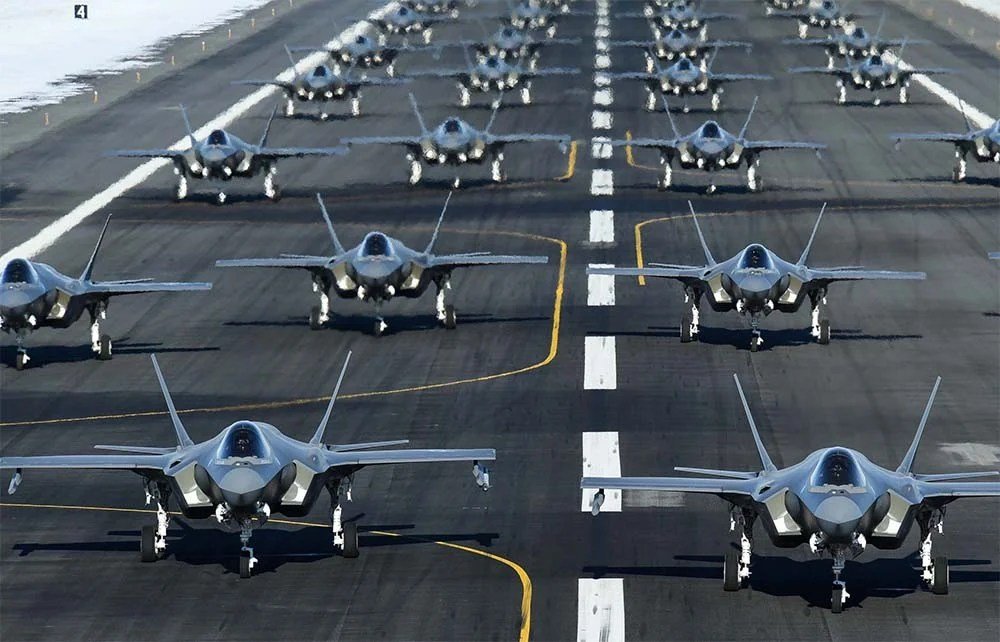
The roar of a jet breaking the sound barrier isn't just noise; it's a profound declaration of power, a shifting of geopolitical plates. The strategic impact on air warfare has fundamentally reshaped how nations perceive conflict, project influence, and defend their interests, moving from rudimentary reconnaissance to a sophisticated, multi-domain ballet of precision and dominance. Understanding this evolution isn't just for military strategists; it's crucial for anyone seeking to grasp the complexities of modern global security.
Air power, once an auxiliary force, now often dictates the tempo and trajectory of a conflict, serving as both a primary strike mechanism and a critical enabler for land and sea operations. It's about more than just bombs and bullets; it's about intelligence, speed, deterrence, and the very fabric of national defense.
At a Glance: Key Takeaways on Air Warfare's Strategic Impact
- From Primitive to Precision: Air warfare evolved from basic observation in WWI to today's precision-guided, stealth-enabled, and network-centric operations.
- Beyond Combat: Modern air power excels in strategic attack, ensuring air superiority, supporting ground forces, gathering intelligence (ISR), and rapid response.
- Asymmetric Advantage: It can offset technological and numerical disadvantages, offering rapid intelligence and targeted strikes against elusive threats.
- Seamless Integration: Air power is tightly integrated with land and maritime forces through real-time data and communication, multiplying overall combat effectiveness.
- Ethical Tightrope: International laws, like the Geneva Conventions, govern its use, demanding distinction between combatants and civilians and proportionality in attacks.
- Drone Dilemmas: Unmanned systems offer vast capabilities but introduce new vulnerabilities to technical failure, jamming, and ethical accountability.
- Future Frontiers: Expect more AI, hypersonics, advanced stealth, and seamless integration of manned and unmanned platforms, pushing the boundaries of warfare.
The Sky's Evolution: Air Warfare's Unfolding Story
Air power's journey began humbly, with early 20th-century aviators peering over enemy lines, offering rudimentary reconnaissance during World War I. Fast forward to World War II, and the skies became a battleground for supremacy, introducing revolutionary jet engines and long-range bombers that could project power across continents. The Cold War accelerated this arms race, ushering in missile technology and the chilling doctrine of aerial nuclear strategies, where entire conflicts could be decided from thousands of feet up, or by ICBMs arcing across the globe.
Today, the focus has dramatically shifted. Precision-guided munitions, sophisticated stealth technology, and network-centric warfare capabilities define the landscape. This allows for incredibly targeted strikes, aiming to minimize collateral damage and achieve specific strategic objectives with unparalleled accuracy. It's a far cry from carpet bombing, reflecting both technological advancement and evolving ethical considerations.
The Modern Air Arsenal: Crafting Strategic Power
Think of modern air warfare not just as individual aircraft, but as a vast, interconnected system designed for strategic dominance. This intricate network relies on several core components:
- Advanced Aircraft: This includes multi-role fighters capable of air-to-air combat and ground attack, heavy bombers for long-range strategic strikes, specialized reconnaissance planes for gathering vital intelligence, and support aircraft like tankers and AWACS (Airborne Warning and Control System) that act as airborne command posts.
- Sophisticated Missile Systems: From precision-guided cruise missiles that can navigate hundreds of miles to hit a specific window, to surface-to-air interceptors designed to defend against incoming aerial threats, missile technology forms a critical layer of both offensive and defensive air power.
- Robust Command and Control (C2) Platforms: These are the brains of the operation, integrating data from countless sources to provide real-time situational awareness and enable rapid decision-making across complex air campaigns.
- Electronic Warfare (EW) Tools: Essential for disrupting enemy communications, radar, and navigation, EW aims to blind, deafen, and confuse opponents, providing a critical advantage in contested airspace.
These components enable a suite of key functions: - Strategic Attack: Striking high-value targets deep within enemy territory to cripple their war-making capacity or political will.
- Air Superiority: Controlling the airspace, denying the enemy the ability to operate their own aircraft effectively.
- Interdiction: Preventing enemy forces and supplies from reaching the battlefield.
- Close Air Support (CAS): Directly aiding ground troops in combat, often neutralizing immediate threats.
- Intelligence, Surveillance, and Reconnaissance (ISR): Gathering crucial information about enemy movements, capabilities, and intentions.
- Rapid Response: The ability to deploy air assets quickly to emerging crises or to support fast-moving operations.
Together, these functions significantly enhance joint operational effectiveness, providing commanders with unparalleled flexibility and reach.
Mastering the Skies: Air Power in Joint Operations
The days of independent air campaigns are largely over. True combat effectiveness hinges on the seamless integration of air power with land and maritime forces. It's like a finely tuned orchestra where each section plays its part to create a powerful symphony. This coordination leverages the complementary strengths of each domain. Air power might provide the high-altitude reconnaissance that guides ground troops, deliver precision strikes to clear a path for naval vessels, or offer critical supply support to isolated units.
The backbone of this integration is real-time data and advanced communication systems. Imagine satellite technology beaming high-resolution imagery and secure radio channels carrying encrypted commands, all converging on data-sharing platforms that give every commander – whether on a tank, a ship, or an aircraft – an identical, up-to-the-minute picture of the battlefield. This unprecedented connectivity enhances decision-making speed, precision, and adaptability, minimizing risks and maximizing operational success across all military efforts. The ability to rapidly share intelligence, identify targets, and synchronize operations means forces can react faster and more decisively than ever before.
Precision and Paradox: Air Power in Asymmetric Conflicts
In conflicts where one side has a significant technological or numerical disadvantage, air power often becomes a crucial equalizer. It's the ultimate trump card in asymmetric warfare, providing a disproportionate advantage against irregular forces. Air assets offer rapid intelligence collection, allowing for real-time tracking of elusive targets. They enable targeted strikes against high-value individuals or critical infrastructure, often without putting friendly ground forces in direct harm's way. Moreover, the mere presence of advanced air power can act as a powerful deterrent, signaling capability and resolve.
However, this immense power comes with its own set of profound challenges. Irregular forces often employ guerrilla tactics, deliberately blending with civilian populations and utilizing complex urban terrain or natural defenses to complicate targeting. This "fog of war," combined with the inherent destructive power of aerial weaponry, raises significant legal and ethical concerns regarding collateral damage. Differentiating between combatants and non-combatants in such environments becomes an agonizingly difficult task, putting immense pressure on intelligence gatherers and decision-makers to ensure every strike is both militarily effective and morally justifiable.
The Ethical High Ground: Navigating Air Warfare's Moral Maze
The destructive potential of modern air power necessitates stringent ethical and legal frameworks, primarily governed by international law, including the Geneva Conventions. These aren't abstract concepts; they are the bedrock upon which legitimate military operations are built.
Two fundamental principles guide the conduct of air warfare:
- Distinction: Air forces are legally obligated to differentiate between combatants and civilians, and between military objectives and civilian objects. This means targets must always be legitimate military objectives, directly contributing to military action.
- Proportionality: This principle mandates that any anticipated collateral damage to civilians or civilian objects must not be excessive in relation to the concrete and direct military advantage expected from an attack. In essence, the harm caused must be proportionate to the military gain.
The increasing reliance on autonomous unmanned systems introduces even thornier debates. Who is accountable when an AI-driven drone makes a decision that results in unintended casualties? How much human oversight is required for systems capable of lethal force? These questions push the boundaries of existing international law and force a re-evaluation of ethical decision-making in the age of artificial intelligence.
The Drone Revolution: Unmanned Systems and Their Strategic Implications
Unmanned operations, particularly through the proliferation of drones, have dramatically enhanced air warfare capabilities. These systems can conduct long-duration ISR missions, execute precision strikes in high-risk environments, and even act as decoys or communication nodes, all without risking human pilots. They offer persistence, reach, and often, a cost-effective alternative to traditional manned aircraft.
However, this technological leap isn't without its risks and challenges. Drones are inherently vulnerable to technical failures, ranging from software glitches to mechanical breakdowns, which can compromise mission success or lead to unintended incidents. They are also susceptible to hacking, where adversaries can gain control of the system, and to jamming, which can disrupt their communication links and navigation systems. Electronic interference, like GPS jamming, can cause drones to lose their positional awareness, potentially leading to them flying off course or even crashing.
Furthermore, the limited onboard decision-making capacity of many autonomous systems increases their reliance on ground control and robust communication links. Any disruption to these links can render the drone ineffective or, worse, uncontrollable, raising concerns about potential loss of control or unintended damage. As we look ahead, the debate isn't just about if drones will be used, but how their vulnerabilities will be mitigated and their decision-making frameworks ethically managed.
Challenges in the Contemporary Air Domain
While air power offers immense advantages, it faces significant and evolving challenges that demand constant adaptation and innovation.
One of the most pressing issues is the proliferation of advanced anti-aircraft defenses. Modern Surface-to-Air Missile (SAM) systems are increasingly sophisticated, capable of targeting stealth aircraft and operating in highly integrated networks. Electronic warfare capabilities are becoming more prevalent, posing a constant threat to communication, navigation, and targeting systems. Even stealth technology, once considered revolutionary, is being met with new countermeasures designed to detect low-observable aircraft. This continuous cycle of offense and defense means maintaining air superiority is an ever-more demanding task.
Unmanned operations, while powerful, introduce inherent reliability risks. Beyond technical failures and susceptibility to hacking or jamming, integrating these systems seamlessly into complex air campaigns adds layers of logistical and command-and-control challenges.
Furthermore, legal and ethical issues surrounding targeted strikes and civilian casualties remain a persistent concern, often scrutinized in real-time by global media. The "proportionality" principle, in particular, is constantly tested in crowded urban environments. Finally, logistical complexities for air forces are enormous, encompassing everything from maintaining vast fleets of highly complex aircraft to ensuring a continuous supply of fuel, munitions, and spare parts across global operations.
Real-World Air Power in Action: Case Studies
Examining recent conflicts provides invaluable insight into the strategic impact of air warfare in practice.
- NATO's 2011 Air Campaign in Libya: This intervention demonstrated how precision air strikes, particularly those enforcing a no-fly zone, could significantly shape the outcome of a conflict without a large-scale ground invasion. Air power neutralized regime forces, protected civilians, and effectively shifted the strategic balance, illustrating its capacity for coercive diplomacy and rapid regime-shaping.
- The Israel-Hamas Conflict: This ongoing conflict frequently showcases the use of advanced fighter jets and sophisticated reconnaissance platforms for targeted strikes against militant infrastructure and leadership. It highlights the critical role of ISR in identifying elusive targets in densely populated areas, as well as the immense challenges and ethical dilemmas of operating in such an environment.
- The Conflict in Syria: This multi-dimensional conflict has seen air power employed by numerous actors, illustrating its integration with ground troops, strategic bombing campaigns against various groups, and the pervasive use of surveillance drones for battlefield awareness. It's a complex tapestry of air-to-ground coordination, demonstrating both the power and the limitations of air campaigns in a highly contested and politically charged arena.
The Horizon of Air Warfare: Future Trends and Technologies
The future of air warfare promises even more dramatic shifts, driven by relentless innovation and evolving strategic needs.
Increased automation and AI-driven systems are poised to revolutionize decision-making and target accuracy. Imagine aircraft that can process vast amounts of data instantaneously, identify threats, and even suggest optimal engagement strategies faster than any human pilot. The goal isn't necessarily fully autonomous combat, but rather to augment human capabilities, allowing pilots and commanders to focus on higher-level strategic objectives.
The development of hypersonic weapons – missiles and aircraft capable of traveling at speeds exceeding Mach 5 – will fundamentally challenge existing air defenses and compress decision-making timelines, potentially ushering in a new era of rapid global strike capabilities. Simultaneously, evolving stealth technologies will continue their cat-and-mouse game with advanced sensors, pushing the boundaries of low observability. This constant innovation is also leading to new capabilities, such as those that will eventually define how we Explore sixth generation aircraft.
The integration of unmanned aerial vehicles (UAVs) with manned platforms will become increasingly seamless. This includes concepts like "loyal wingmen" – AI-controlled drones flying alongside manned fighters – and swarm technology, where dozens or hundreds of small, coordinated UAVs can overwhelm enemy defenses or conduct complex reconnaissance missions. Central to all these advancements will be the development of robust, secure communication networks capable of handling immense data flows and resisting sophisticated electronic attacks, ensuring that the increasingly complex "battle network" remains connected and resilient. These trends aren't merely technological curiosities; they represent the next frontier in the strategic impact on air warfare.
Staying Ahead of the Curve: Strategic Preparedness for Tomorrow's Skies
The strategic impact on air warfare will only continue to grow, demanding continuous adaptation from nations worldwide. For military strategists, policymakers, and indeed, any engaged global citizen, understanding these trends is not merely academic—it’s vital for national security and international stability.
The path forward requires proactive investment in research and development, pushing the boundaries of AI, hypersonic propulsion, and advanced materials. It necessitates the development of robust ethical frameworks that address the profound implications of increasing autonomy in warfare, ensuring accountability and adherence to international law. Finally, international cooperation through joint exercises, intelligence sharing, and arms control efforts will be crucial for managing the challenges posed by these revolutionary technologies and for fostering a more stable global security environment. The skies will forever be a domain of strategic importance; mastering them means mastering the future of conflict itself.